
Key Takeaways
- Booking fees and custom domain access are the two biggest cost differences between bio link platforms heading into 2026
- Linktree’s free and lower-cost plans take a 12% and 9% commission respectively on digital product and course sales, with the cut only dropping to zero on its $35-a-month Premium tier
- Shorby has no free plan and keeps custom domain access locked behind its $29-a-month Pro tier
- Linx 2 Me includes a free booking calendar and a custom domain on every plan, including its entry-level tier
- Choosing a platform often comes down to whether ease of use, advanced marketing power, or predictable pricing matters most
Bio link pages have become the digital shopfront for creators and small business owners alike, but not every platform charges for that shopfront the same way. Two costs quietly decide how much a page actually earns its keep over a year: what happens when someone books an appointment, and whether the web address looks professional or carries someone else’s brand name. Both matter more in 2026 than they did a few years ago, now that bookings and branded links have become standard expectations rather than nice extras.
Working out who charges what for these two features is trickier than comparing headline subscription prices, because commissions and domain restrictions often sit several menu screens deep. This comparison looks closely at how these platforms stack up against each other, comparing where fees appear and where custom domains sit locked behind higher tiers. That comparison forms the backbone of what follows.
The 2026 Booking Fee Battle
A booking fee sounds small until it is multiplied across a busy month of appointments, client calls, or paid sessions. For a hairdresser, coach, or consultant using a bio link page to fill their diary, a commission taken on every single booking adds up fast, especially during a strong month when the calendar is full.
The three platforms compared here take noticeably different approaches to this. Some charge a percentage every time someone books, some avoid commission altogether but skip booking tools entirely, and at least one includes a free scheduling tool as standard. Understanding which camp a platform falls into before signing up saves an unpleasant surprise once the first invoice or reconciliation arrives.
Who Charges What For Bookings
Commission-based platforms
Linktree’s free plan takes a 12% commission on digital product and course sales made through the platform, a cut that eats directly into revenue for creators selling anything through their page. Stepping up to the Starter plan or Pro plan brings that commission on digital product and course sales down to 9%, still a meaningful slice for anyone running regular sales or bookings. Only Linktree’s Premium plan, priced at $35 a month billed monthly, or $24 a month billed annually, removes the commission entirely, meaning the fee only truly disappears once a subscriber is paying for the most expensive tier available.
Shorby takes a different route by skipping native commerce features altogether. Rather than charging commission, it relies on linking out to external booking or payment platforms, so users avoid a direct cut while sacrificing the convenience of an in-page transaction. That trade-off suits creators already using dedicated booking software elsewhere, but it means paying for two tools instead of one.
Flat-fee and no-fee alternatives
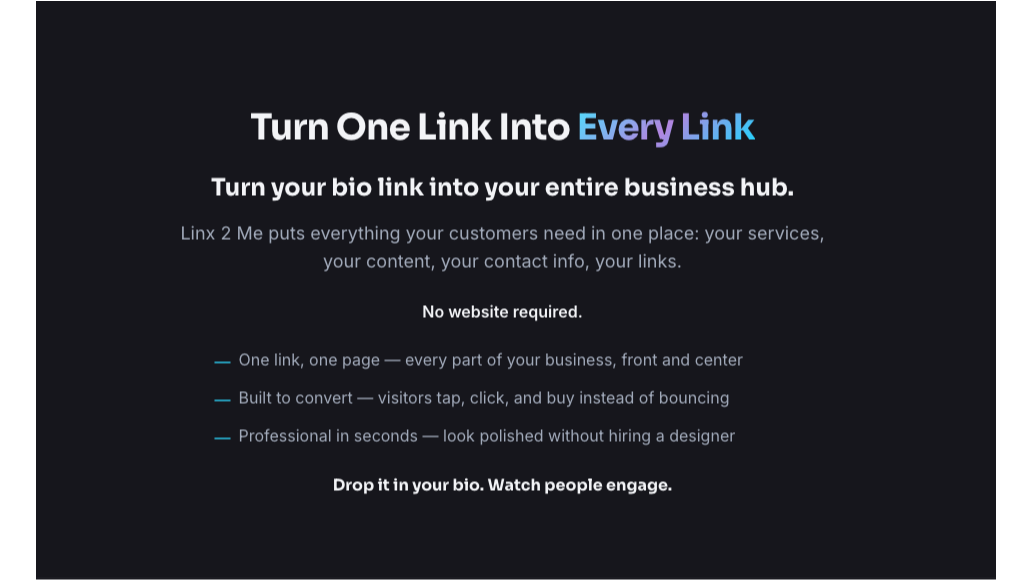
Linx 2 Me approaches booking differently by including Ready 2 Schedule, a Calendly-style scheduling app, on every plan at no extra cost. Whether a subscriber is on the Go Solo, Pro, or Pro+ tier, clients can pick an available time slot directly from the bio link page without any commission taken from the booking itself. For small business owners who take regular appointments, that structure removes one of the more unpredictable costs of running a page, since the price stays the same whether the calendar is quiet or fully booked.
Custom Domains: Included or Locked Away?
A web address matters more than it might first appear. A link that reads as a business’s own domain rather than a third-party subdomain builds trust the moment someone taps it, and it stays consistent across a van livery, a shopfront sign, an email signature, and a printed flyer.
Platforms without domain support
Linktree does not support custom domains on any of its plans. The platform’s suggested workaround is a redirect link, but that link still ultimately leads back to a linktr.ee address, meaning the branding gap never fully closes no matter which tier a subscriber chooses. For a business trying to look established to corporate clients or bigger pitches, that limitation can quietly undercut an otherwise polished page.
Domain access tiered by plan
Shorby handles domains differently by gating the feature behind its pricier tier. The entry-level Rocket plan, priced at $15 a month billed monthly, or $12 a month billed annually, does not include custom domain access at all. Subscribers only gain it by moving up to the Pro plan, priced at $29 a month billed monthly, or $24 a month billed annually, which also adds content feeds from platforms such as YouTube, Shopify, WordPress, and RSS.
A custom domain comes included on every plan from the very first tier with Linx 2 Me , the other platform compared here, scaling the allowance up as the plan grows: one custom domain on Go Solo, five on Pro, and ten on Pro+. That structure lets a subscriber running several side projects or client brands connect each one to its own proper domain without needing to upgrade purely to unlock the feature. More detail on how domain access changes across plans sits on Linx 2 Me, which lays out the full breakdown alongside its other plan features.
Comparing Entry-Level Plan Costs
Entry-level pricing tells only part of the story once booking fees and domain restrictions are factored in, but it still matters as the first number most people compare. The entry-level Go Solo plan costs £4.50 a month billed monthly, or £48 a year on the annual plan, which works out at £4.00 a month billed annually. Linktree’s entry-level Starter plan costs $8 a month billed monthly, or $6 a month billed annually, though it carries the commission structure and domain restrictions already covered above. Shorby’s entry point sits at $15 a month billed monthly, and that tier still excludes custom domain access entirely, meaning a subscriber pays more for less on that particular feature.
Mid-tier and top-tier pricing tells a similar story. The Pro plan runs at £7.99 a month billed monthly, or £64.99 a year annually, while the Pro+ plan sits at £12.99 a month billed monthly, or £99.99 a year annually. Shorby’s Pro plan, the tier that finally includes custom domains, costs $29 a month billed monthly, or $24 a month billed annually, a gap that several independent reviewers have flagged when ranking link-in-bio tools by overall value.
Feature Depth Beyond Domains and Booking
Multiple pages versus single pages
Most bio link platforms limit a subscriber to one page per account, which works fine for a single creator profile but becomes restrictive fast for anyone running more than one brand, project, or team member’s contact details. This platform takes a different approach by allowing multiple link pages on its paid plans, scaling from one page on Go Solo up to several on Pro and Pro+. That structure suits an estate agent running a page for each listing, or a small business owner separating a main hub from an individual team member’s page, without needing separate subscriptions for each one.
Analytics, templates, and media embeds
Beyond page limits, the depth of everyday features shapes how much daily value a subscriber gets for the monthly cost. Real-time analytics, a wide template library, and clean media embeds all affect how professional a page feels and how easily it can be customized to match a brand.
- Real-time analytics with custom date ranges, more than eighteen templates, and automatic embeds for YouTube, TikTok, Spotify, and SoundCloud content are included as standard on this platform.
- Linktree is generally considered straightforward and easy to use, appealing to creators who want a page live quickly without deep customisation.
Shorby leans into advanced customisation and tracking, including retargeting pixels and one-tap messenger deep-links, though its entry-level Rocket plan caps links at 10 per page, making it a fit for marketers who want granular campaign data.
Choosing Between Ease, Power, and Price
Picking the right platform comes down to matching a page’s purpose with the tool built for that purpose. A creator who wants the simplest possible setup and does not mind a lighter feature set may find Linktree’s straightforward interface appealing, provided the commission structure on lower tiers is factored into any sales made through the page.
A marketer running paid campaigns and wanting granular retargeting data might lean toward Shorby, accepting the higher entry cost and the need to reach its Pro tier before custom domains become available. Small business owners who take regular bookings and want a domain that matches their brand from day one may find the combination of a free scheduling tool and included custom domains a more straightforward fit for keeping monthly costs predictable.
Domain Ownership Decides Long-Term Value
Long-term value on a bio link platform rarely comes down to the sticker price alone. A page tied permanently to someone else’s brand name in the URL, or one that keeps charging a slice of every booking taken, costs more over a year than the monthly fee suggests. A custom domain, once connected, travels with a business even if it later switches providers, and it reads as more established the moment a client, customer, or follower taps the link.
Weighing booking fees against domain access side by side is the clearest way to judge which platform earns its subscription cost in 2026. For creators and small business owners ready to compare options directly, checking out bio link platforms with included booking and domain features is a next step before committing to a plan.
Linx 2 Me
studio@linx2me.com
9-11 Vittoria Street
Birmingham
West Midlands
B1 3ND
United Kingdom


