
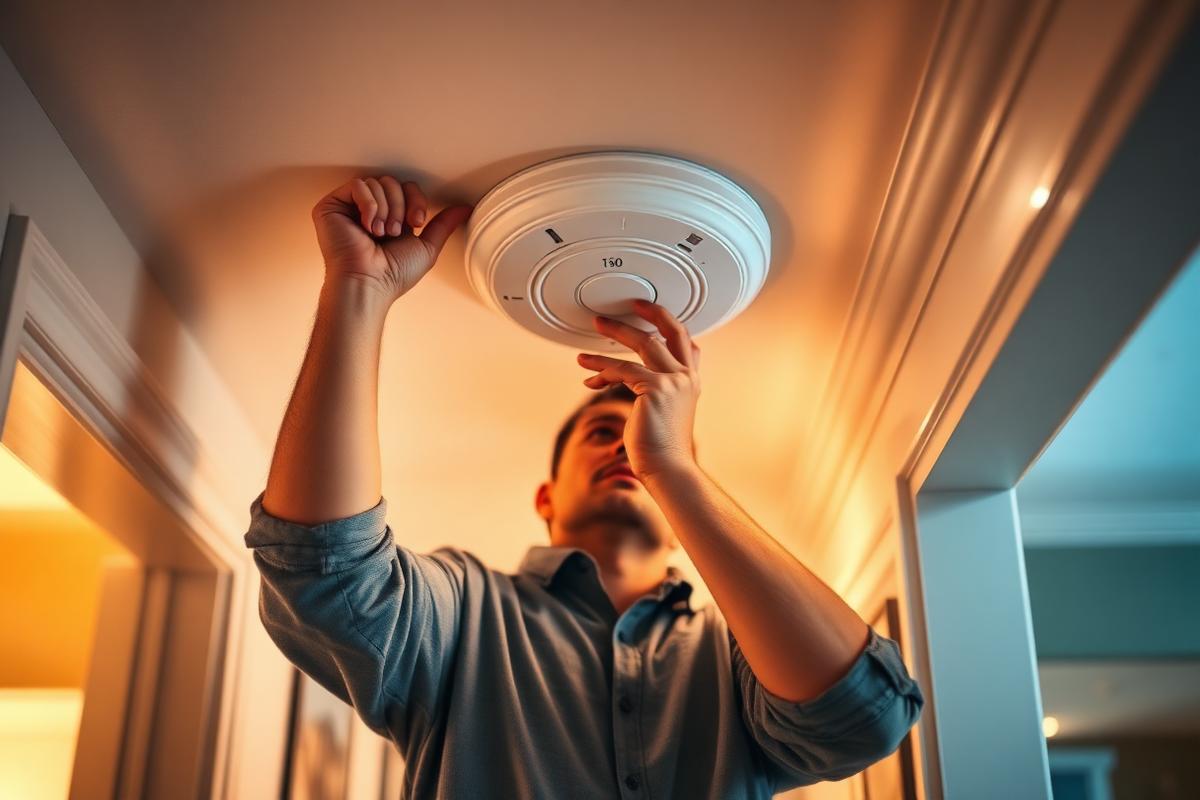
CHARLOTTE, NC – X-Sense highlights the growing need for whole-home protection as fire behavior in modern households becomes increasingly unpredictable.
Understanding smoke detection, alarm placement, interconnected coverage, and routine maintenance can help households prepare for fire-related emergencies.
A residential fire can develop quickly, leaving occupants with limited time to recognize the danger and respond. Although no device can prevent every fire, a properly selected and maintained smoke alarm can provide an important early warning when smoke is detected.
Smoke alarms are among the most fundamental components of a home-safety plan. However, their effectiveness depends on more than simply attaching a device to the ceiling. Homeowners must consider the type of alarm they choose, where it is installed, how effectively it can be heard throughout the property, and whether it is tested and maintained regularly.
How Smoke Alarms Detect Potential Fires
Most residential smoke alarms are designed to monitor the surrounding air for particles associated with a developing fire. Photoelectric smoke alarms use a light-based sensing chamber to detect visible smoke particles, making them particularly useful for identifying smoke produced by slow-smoldering fires.
When smoke enters the sensing chamber and reaches the alarm’s detection threshold, the unit activates an audible warning. Many modern models also include visual status indicators, low-battery notifications, self-testing functions, voice alerts, or wireless interconnection.
The right smoke alarm depends on the layout of the property and the level of connectivity the household requires. Available formats include standalone alarms, Wi-Fi-connected models, radio-frequency interconnected alarms, and systems that communicate through a central base station.
Standalone units provide localized detection and sound individually. Interconnected alarms are designed to provide wider notification coverage by allowing multiple devices to respond when one unit detects smoke.
Why Alarm Placement Matters
A smoke alarm can only provide useful warning if it is installed in an appropriate location and its sound can reach the people inside the property.
Homeowners should follow the installation instructions supplied with each alarm, along with applicable building regulations and recommendations from local fire-safety authorities. The number of devices required will depend on the size, number of floors, room arrangement, and construction of the home.
Alarm placement should also account for environmental conditions. Installing a smoke alarm too close to cooking appliances, steamy bathrooms, air vents, ceiling fans, or other sources of airborne particles may contribute to nuisance alarms or affect detection performance.
Residents should avoid moving, covering, or disabling an alarm simply because it activates during normal household activities. Repeated nuisance alerts may indicate that the device needs to be cleaned, repositioned, or replaced with a model better suited to that location.
Interconnected Coverage Provides Broader Warning
A standalone alarm may be difficult to hear from another floor, a distant bedroom, or an area separated by closed doors. This is why interconnected systems can be particularly valuable in large or multi-story homes.
When one interconnected alarm detects smoke, the other linked units can activate as well. Instead of limiting the warning to the room where the hazard begins, the system helps alert people throughout the property.
X-Sense SD19-W wireless interconnected smoke alarm illustrates this type of whole-home approach. The photoelectric alarm can be linked with compatible X-Sense wireless alarms, allowing multiple units to sound together when one detects smoke.
According to its technical specifications, the system can support up to 24 compatible wireless units and has a transmission range of more than 820 feet, or 250 meters, in open-air conditions. Actual performance within a home may vary because walls, floors, construction materials, electrical equipment, and other physical obstacles can affect wireless communication.
The SD19-W operates independently of a smart application and is not compatible with the SBS50 base station. It is therefore intended for households seeking direct wireless interconnection rather than app-based monitoring.
Long-Life Batteries Can Simplify Maintenance
Battery condition is an essential part of smoke-alarm reliability. An alarm cannot provide dependable protection if it has been disconnected, its battery has been removed, or the power source has expired.
Some modern smoke alarms use sealed lithium batteries designed to operate for the service life of the unit. The SD19-W, for example, includes a sealed 10-year lithium battery. Because the battery is sealed, it is not intended to be removed or replaced separately.
A long-life battery can reduce the need for routine battery changes, but it does not eliminate the need for testing and inspection. The complete alarm must still be replaced when it reaches the end of its recommended lifespan, becomes damaged, or fails a functional test.
Users should pay attention to warning chirps, indicator lights, and other device signals. Because alert patterns can differ between models, the product manual should be consulted to determine whether a signal indicates smoke, a low battery, a malfunction, the end of the unit’s lifespan, or another condition.
Regular Testing Remains Essential
Every smoke alarm should be tested according to the manufacturer’s instructions. Testing confirms that the horn, power supply, and basic alarm functions are operating.
The SD19-W also runs an automatic self-test every 60 seconds and samples the surrounding air three times every 10 seconds. Its insect-resistant design helps prevent small insects from entering the sensor chamber and contributing to false alarms.
Automatic monitoring is helpful, but it should not replace manual testing. Households should also keep the alarm openings clear of dust and debris and confirm that all connected units respond during an interconnection test.
A Smoke Alarm Is One Part of Preparedness
Smoke alarms are most effective when included in a broader household emergency plan. Family members should understand what an alarm sounds like, how to leave the property safely, and where to meet after exiting.
Children, older adults, people with hearing difficulties, and anyone requiring assistance may need additional planning or specialized notification devices.
Smoke detection technology continues to offer more options, from straightforward standalone alarms to interconnected and app-supported networks. Regardless of the model selected, effective protection still depends on appropriate placement, routine testing, clear emergency planning, and timely device replacement.


